Disclosure: This article contains no affiliate links. Reservation steps, prices, kids' sets and allergen policies below come from the official websites of Kura Sushi, Sushiro and Hama Sushi (English and Japanese), checked on October 10, 2026.
Dollar amounts are approximate at $1 ≈ ¥158 (October 2026). You pay in yen.
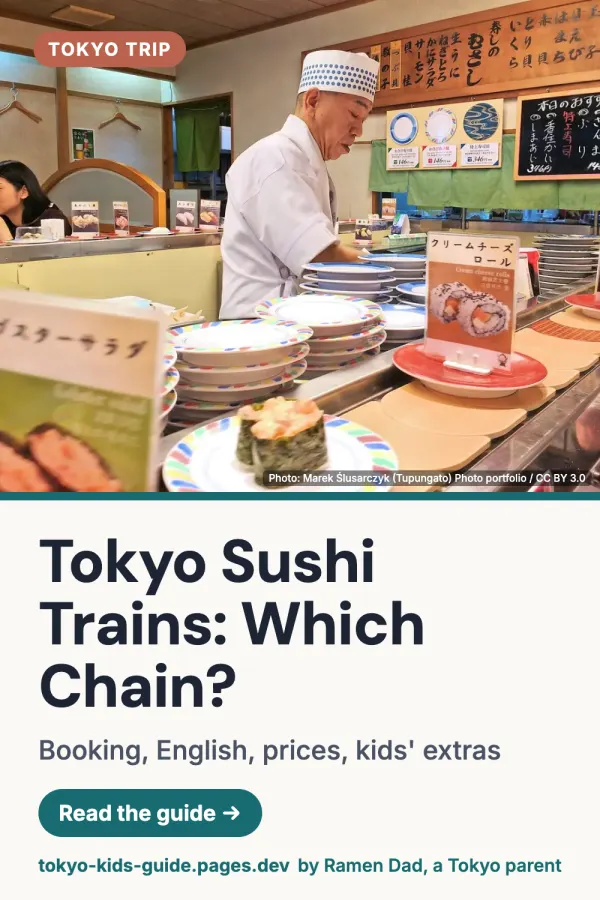
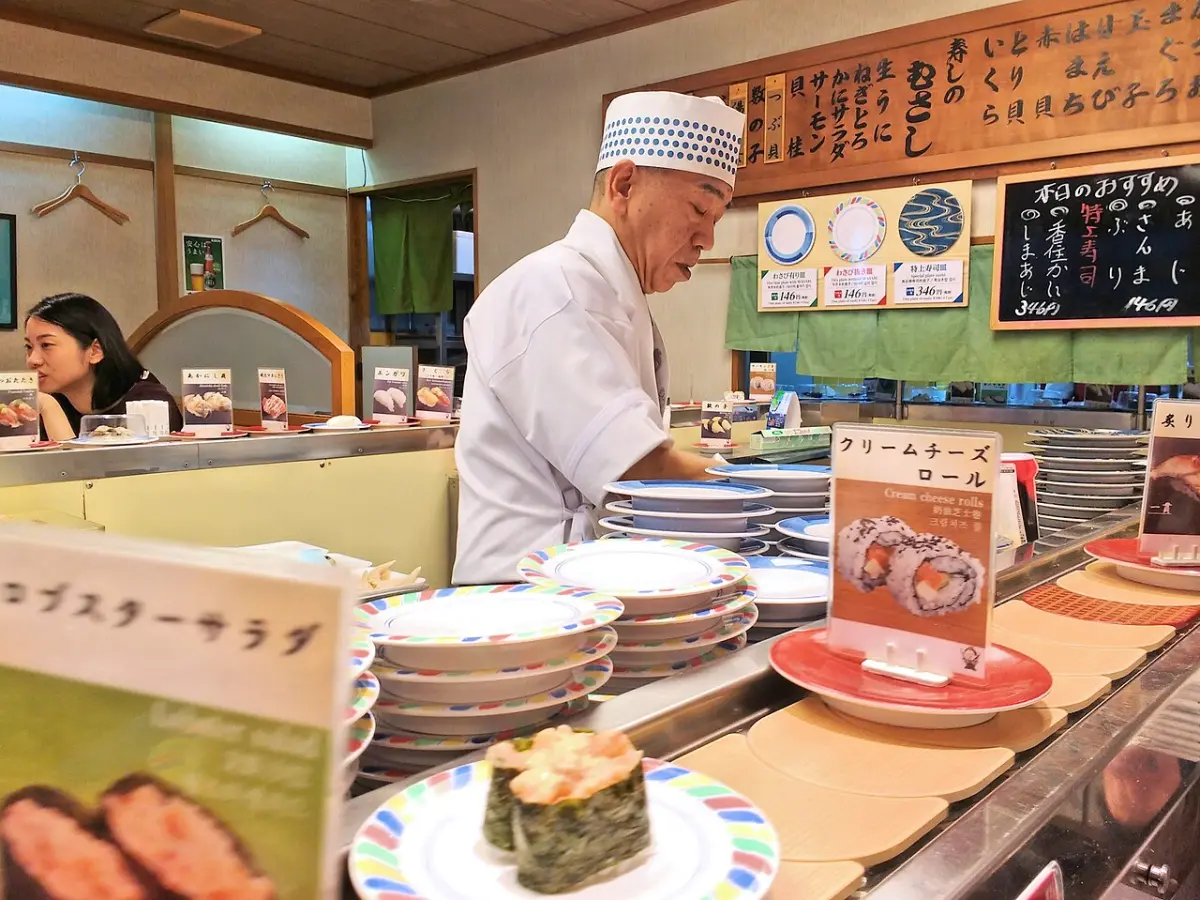
Conveyor belt sushi (*kaiten-zushi*) is one of the easiest meals in Tokyo for visitors: cheap plates, picture menus, food that arrives in minutes, and you can usually get by with very little Japanese. It's especially convenient for families with kids, because kids can choose their own plates and nobody waits long for food.The catch is that the big chains now run on apps, kiosks and touch panels, and some reservation and check-in screens may be in Japanese. Turn up at 6:30 p.m. on a Saturday without a booking and you may watch a screen full of queue numbers while your kids melt down.
This guide explains how conveyor belt sushi in Tokyo works at the three chains you’ll see most: Kura Sushi, Sushiro and Hama Sushi. It covers booking, ordering, paying, kids’ extras and what each chain says about allergens.
Ramen Dad’s note: Conveyor-belt sushi is a regular family meal for us, and we go to the big chains. It’s one of the easiest meals in Tokyo with kids.
Quick answer: Kura vs Sushiro vs Hama
If you only remember one thing: check the booking options before you leave the hotel. Kura offers web reservations without an app, while Sushiro and Hama use their own apps. Booking ahead makes the visit easier, but it doesn’t guarantee immediate seating, especially at busy dinner times.
| Kura Sushi | Sushiro | Hama Sushi | |
|---|---|---|---|
| Book ahead | Web “guest reservation”, no app needed (email address required) | Sushiro app (smartphone only); no phone bookings | Hama Sushi app (queue ticket or time slot); no seat reservations |
| Check in | Kiosk at the entrance, enter reservation number | Reception kiosk, enter reservation number | Follow the app’s instructions at the store |
| English | Website and first-timer guide in English; booking screen switches language | Touch panel in English, Chinese (simplified), Korean (official) | English website; panel languages not stated officially |
| Price per plate | From ¥110 (≈$0.70) at some stores; store tiers ¥110/¥115/¥125/¥145 | From ¥120 (≈$0.76), tax included | Many plates ¥110 (≈$0.70), tax included |
| Kids’ hook | Bikkura Pon game every 5 plates | “Kodomo Sushiro” kids’ page, kids chairs and diaper tables | Hamakko sets with a capsule-toy coin |
| Payment | Cashless available (self-checkout) | All major credit cards and QR payments; no e-money | Cash, credit cards and some e-money (not at every store) |
| Allergen list | English PDF, updated daily | English PDF, 28 items | Japanese PDF and on the touch panel, 28 items |
Prices and services vary by store, and chains change them often, so treat the table as a starting point and check the linked pages before you go. Kura’s prices in particular differ a lot between branches (its Asakusa ROX flagship starts at ¥145, about $0.92), so check the menu for the branch you plan to visit.
How conveyor belt sushi works (the basic flow)
The three chains differ in details, but a visit looks like this:
- Get a number. Book a time slot on the chain’s app or website, or take a ticket at the kiosk when you arrive.
- Check in at the kiosk. Enter your reservation number. You get a ticket with your table number, or your number is called.
- Order on the touch panel, or take plates from the belt. Use the screen to browse the menu and order. Depending on the store, your order may arrive on the belt, on a separate delivery lane or by another automated system, and some stores also let you take plates straight from the belt.
- Help yourself to tea, soy sauce and wasabi from the table. Green tea is usually powder in a container plus a hot-water tap built into the table.
- Pay. Some stores count your plates automatically; you pay at a self-checkout or the register.
What to do with empty plates: at Kura, empty sushi plates go into the slot at your table, which counts them and runs the Bikkura Pon game (see below). The slot is for sushi plates, so keep bowls and cups on the table. At other chains, follow the instructions at your table and on the screen for empty plates and checkout.
Hot water warning for little kids: the hot-water tap at the table is for tea and it’s genuinely hot. Sit your toddler on the side away from it, and keep small hands off the belt and the express lane.
More safety tips for toddlers: watch for hot bowls of ramen, udon or miso soup, cut food into small bites for young children, and check capsule-toy prizes (from Kura’s Bikkura Pon or Hama’s coin machine) for small parts and age labels before handing them to a child under 3. A table seat is usually easier than a counter seat with young kids.
Ramen Dad’s note: We have our own seating habits at conveyor-belt sushi. Sit your toddler on the side away from the hot-water tap.
Kura Sushi: book without an app, then play Bikkura Pon
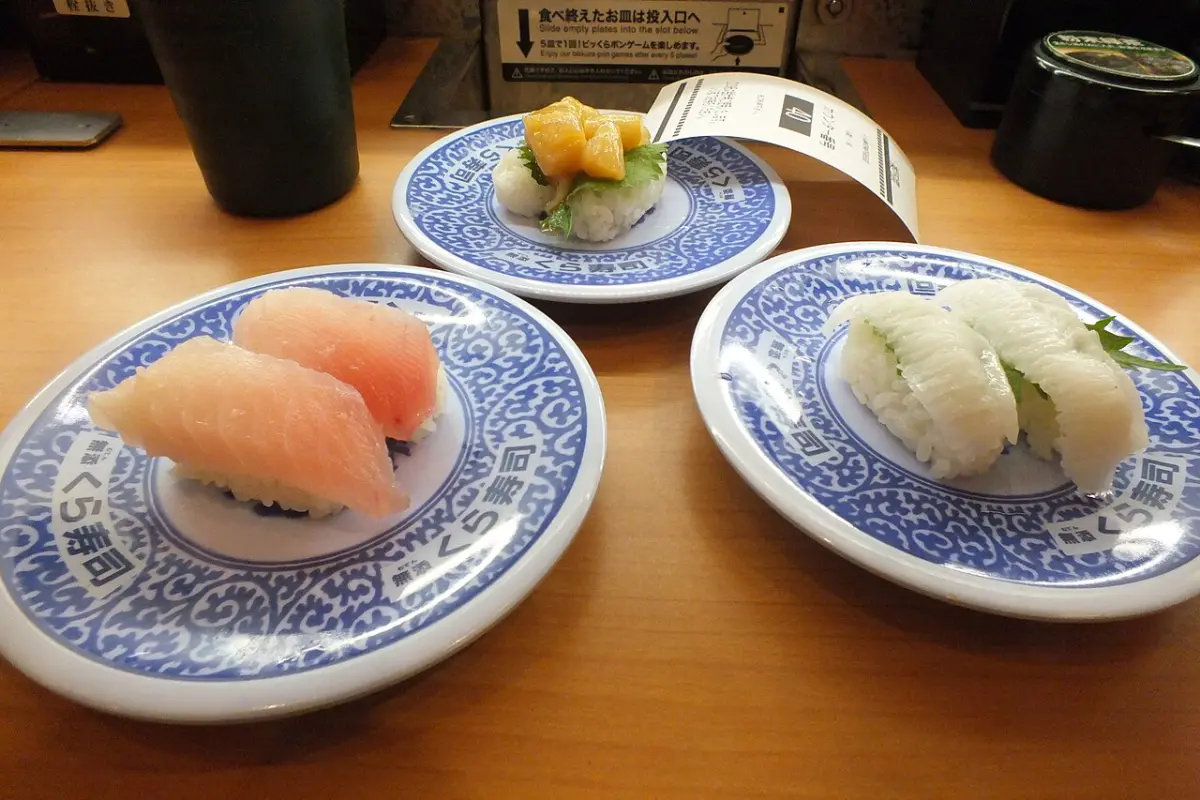
Kura Sushi says it has more than 500 stores in Japan and uses no “four major additives” (chemical seasonings, artificial sweeteners, synthetic colors and artificial preservatives) in its ingredients.
Booking at Kura
Kura’s guest reservation service doesn’t need its app, which makes it the easiest of the three for a tourist phone. You’ll need an email address. Per Kura’s official steps:
- Search for the store on Google Maps and scroll down to Reserve.
- Check availability and tap to continue.
- Enter your email and agree to the terms. A confirmation email arrives; open the link in it.
- Choose your language, then the number of people, date and time.
- You get a reservation number.
Kura notes that groups of five or more may be seated at separate tables.
At the store
At the entrance kiosk, press the orange “Check-in” button on the left, enter your reservation number and take the ticket showing your seat number. Chopsticks, soy sauce, sweet sauce and powdered green tea are stored in the table. Plates on the belt sit under an antibacterial cover that opens when you press a button.
You can order on the touch panel or scan a code on the screen to order from your own phone, and orders arrive on the express “order lane.”
Bikkura Pon, the reason kids ask for Kura
Drop your empty plates into the slot at the table. Every five plates starts a game on the screen, and if you win, a capsule toy (gacha) prize drops out. It’s a game, so you won’t always win. Kura’s global flagship store by Oshiage Station (Tokyo Skytree) has a bigger “Bikkura Pon! DX” version, which makes it a handy lunch stop on a Skytree day.
Paying at Kura
A camera-and-AI system counts your plates. Press the buttons to finish, then hold your ticket over the self-checkout and pay. Kura’s English site says cashless payment is available; check what each store takes when you pay.
Kura also publishes an English allergen list (PDF), updated daily, with a warning that cross-contact is possible in its factories and stores. Kura first-timer guide (Japanese) / Kura reservation steps (Japanese) / English allergen list (PDF)
Sushiro: English touch panel and app bookings
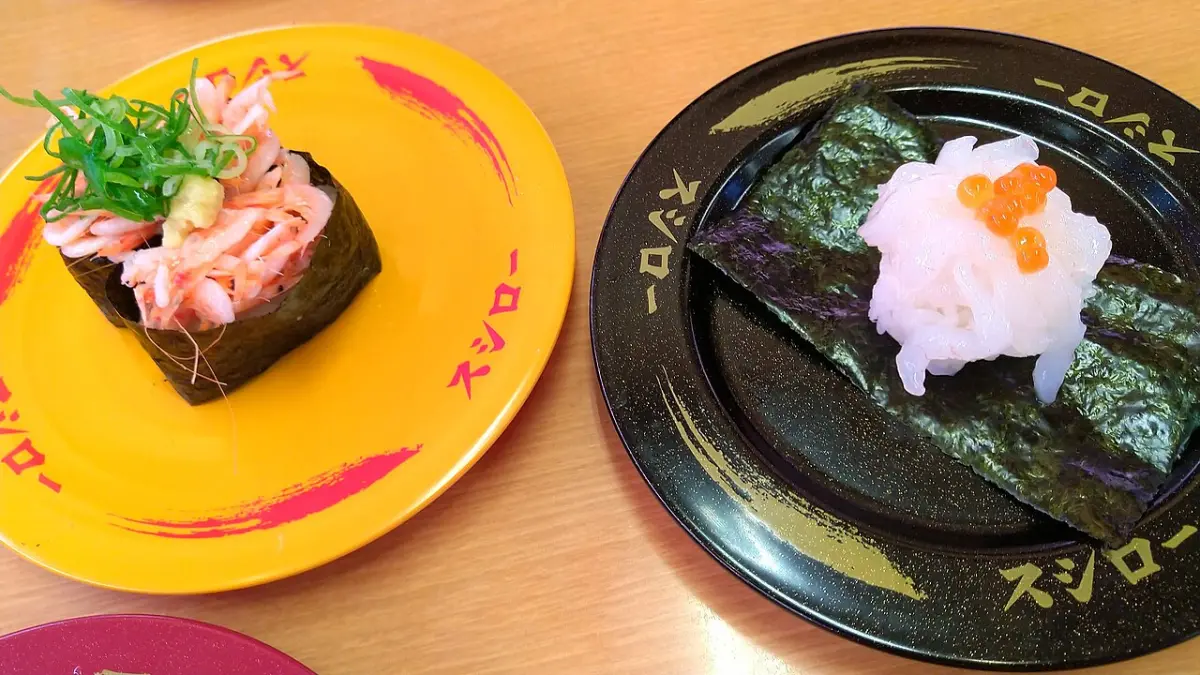
Sushiro is Japan’s other giant chain. Its English website says the touch panel supports English, Chinese (simplified) and Korean, the menu has more than 100 items, and plates start at ¥120 (≈$0.76), tax included (items and prices vary by store).
Booking at Sushiro
According to Sushiro’s FAQ, you can book a table with the Sushiro app at Sushiro stores nationwide except the Sakurazuka store and Sushiro To Go shops. It doesn’t take phone bookings, and the booking works on smartphones only. The Japanese website also has a booking button that opens in LINE.
The app gives you two choices:
- “Going now” (今から行く): you get a queue number. The wait time shown is an estimate from when you get the ticket until your number is called, not from when you arrive.
- “Going later” (後で行く): a time slot. If you book 1:00 p.m., you’re called between 1:00 and 1:15, though it can shift with how busy the store is.
The booking system is down for updates every night from about 2 a.m. to 6 a.m., so a jet-lagged 4 a.m. booking may not work.
When you arrive, enter your reservation number at the reception kiosk to check in. Staff may ask to see your phone.
Kids and payment at Sushiro
Sushiro’s FAQ says its stores have kids chairs and diaper-changing tables. It has a kids’ page (“Kodomo Sushiro”) and a character called Dakkozushi. Private bookings and big group events aren’t accepted.
For payment, the English site says Sushiro takes all kinds of credit cards and QR code payments, but not electronic money (so don’t count on tapping a transit card), and a few stores accept only certain QR services.
Sushiro’s allergen information covers the 28 items in Japan’s labeling rules (as of October 2026 it notes pistachio is still being checked; re-check the latest version before your trip), and there’s an English allergen PDF. Sushiro English site / Sushiro FAQ (Japanese)
Hama Sushi: ¥110 plates and kids’ sets with a toy coin
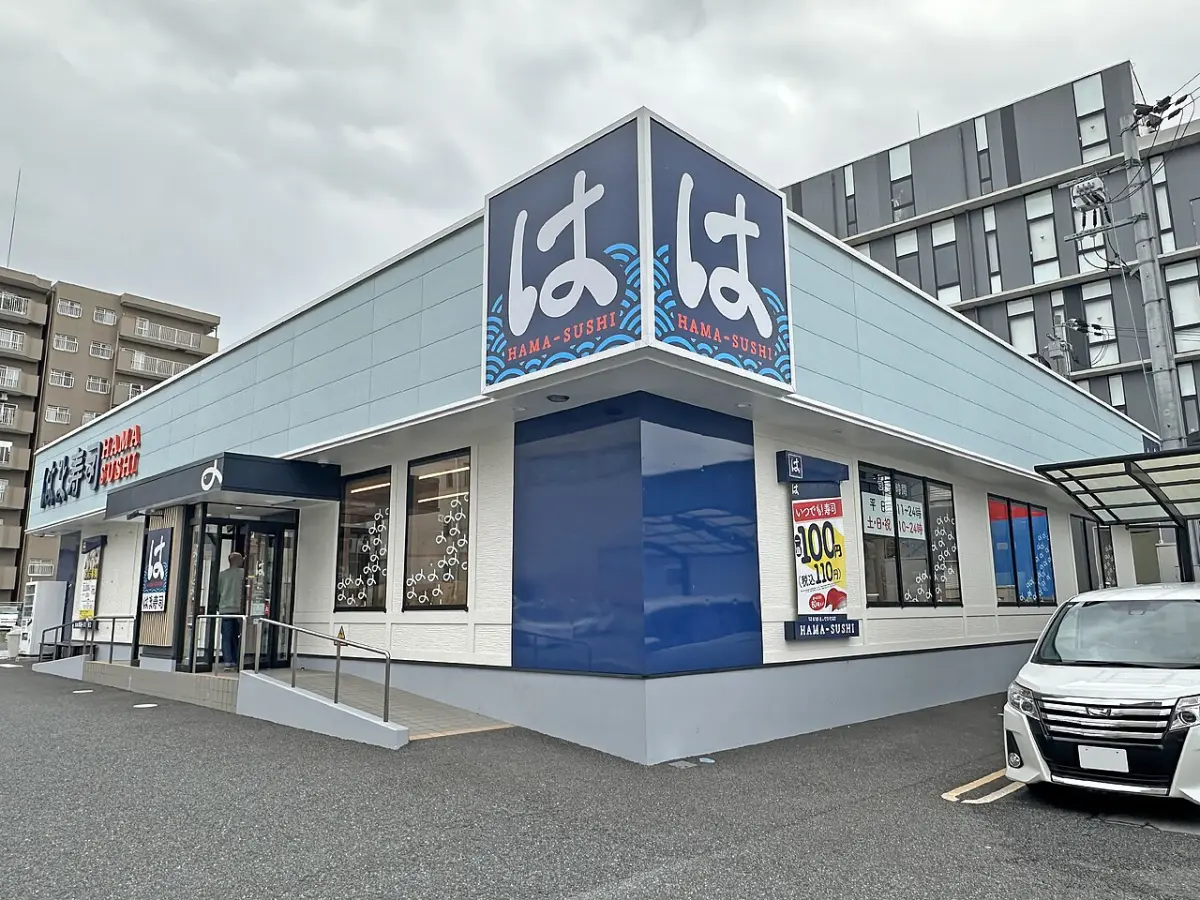
Hama Sushi offers many budget-friendly plates, although prices vary by location. Its English site says many plates are ¥110 (≈$0.70), tax included, with some items up to ¥572 (≈$3.60).
Booking at Hama
Hama’s FAQ is clear: it doesn’t reserve specific seats, but its official app offers a queue-ticket booking and a time-slot booking. Hama Sushi app (Japanese)
Hamakko sets: the kids’ meal
Hama’s official page says it welcomes small children and has children’s booster chairs at every store. Its kids’ meals, called Hamakko sets, each come with a drink (13 to choose from) and a coin for the in-store capsule-toy machine:
| Set | Price (tax included) |
|---|---|
| Hamakko 3-item set (includes udon and mini fries) | ¥506 (≈$3.20) |
| Hamakko ramen set | ¥440 (≈$2.80) |
| Hamakko udon set | ¥396 (≈$2.50) |
| Hamakko fries set (mini fries, about half a regular portion) | ¥319 (≈$2) |
Details from Hama: anyone can order them, kids or adults; the coin is good only until closing that day and can’t be taken home or replaced if lost; you can’t choose the prize (capsule toys can contain small parts, so check the age label before giving one to a toddler); and the noodle dishes are cooked with the same equipment as soba. That last note matters if your child has a buckwheat allergy. Hamakko sets (Japanese)
Hama’s site also mentions a touch panel that talks in the voices of popular voice actors. Kids tend to notice.
Paying at Hama
Hama takes cash, credit cards, some e-money and its own Zensho Cooca card, but cards and e-money aren’t accepted at every store. Check the store page on Hama’s store finder, or carry some yen.
Ramen Dad’s note: My daughter has had her fun with the kids’ extras at these chains. Check capsule toys for small parts and age labels before handing them over.
What picky eaters can order
You don’t need to love raw fish to eat well at conveyor belt sushi. All three chains list sides like udon, ramen, fries and desserts, and the touch panels show pictures, so a child can point. Many plates also have cooked toppings: Kura, for example, lists tamagoyaki (sweet omelet), hamburger steak and corn sushi among its kid favorites. Start with one or two familiar-looking plates; portions are small, so you can order more once you see what your child actually eats. If your child has a food allergy, don’t judge a plate by whether it looks cooked; check the allergen list (below). For more picky-eater strategies, see my guide to eating out in Japan with a picky eater or toddler.
If you’re near Tokyo Station rather than a neighborhood store, my kid-friendly restaurants near Tokyo Station guide has other options. And for a quick hotel-room dinner, konbini food for kids is the backup.
Allergies: read the caveats, not just the chart
Allergen charts at these chains are helpful, but none of them promises an allergy-safe meal. Here’s what each chain says in its own words:
- Kura: its English allergen list warns that cross-contact can happen in its factories and stores.
- Sushiro: allergens not on the list can get in during cooking and plating; some seafood may naturally contain shrimp or crab. Sushiro says the information doesn’t guarantee you won’t react, and asks you to decide after consulting a specialist.
- Hama: knives, cutting boards, gloves, dishes and frying oil are shared, noodles share cooking equipment, all drinks come from shared nozzles, and Hama does not remove or swap ingredients to avoid allergens. Seasonings you add yourself aren’t covered by its list. Hama also says its list is no guarantee and asks customers to consult a doctor and decide for themselves.
So if your child has a food allergy, check the chain’s latest list before each visit, talk to your doctor before the trip, and carry an allergy card in Japanese (my eating-out guide explains how). If your child does react, my guide to getting medical help in Japan has the emergency numbers. For a severe reaction, call 119.
FAQ from parents
“Do we need to book conveyor belt sushi in Tokyo?” You don’t have to, but it helps a lot at busy times like weekend evenings. A booking isn’t a guaranteed seat time: Sushiro, for example, says a 1:00 p.m. slot is called between 1:00 and 1:15 and can shift when the store is busy. Kura’s web booking works without an app. Sushiro and Hama take bookings through their own apps, and Sushiro doesn’t take phone bookings.
“Is there an English menu?” Sushiro’s official site says its touch panel supports English. Kura and Hama have English websites; at Kura you can also order from your own phone by scanning the code on the screen. Pictures on every panel make pointing easy.
“Can a toddler sit at the counter?” Sushiro says it has kids chairs, and Hama says it has booster chairs at every store. With a toddler, a table seat (テーブル席, tēburu seki) is usually easier than the counter; ask staff if the kiosk offers you counter seats.
“Do I need cash?” Not always. Sushiro takes credit cards at all stores; Kura has cashless self-checkout; Hama accepts cards at many stores but not all. Sushiro doesn’t take e-money, so a Suica alone may not work there. Carry some yen as a backup.
“Can the kids’ meal be taken home?” Not at Hama: Hamakko sets are eat-in only, and the capsule-toy coin must be used the same day.
“Is the hot water at the table safe for kids?” It’s a hot-water tap for tea, so treat it like a kettle. Seat young children away from it.
“What Japanese phrases help?” Three cover most visits: Tēburu seki onegaishimasu (テーブル席お願いします, “A table, please”), Eigo no menyū wa arimasu ka? (英語のメニューはありますか, “Do you have an English menu?”) and Okaikei onegaishimasu (お会計お願いします, “The check, please”).
Before you go: conveyor belt sushi checklist
- Choose a specific branch. Search for Kura Sushi, Sushiro or Hama Sushi near your hotel on Google Maps and save it.
- Check that branch’s official page for opening hours, prices and payment methods (Kura and Hama prices and payment options vary by store).
- Install the app if you’re going to Sushiro or Hama, and set up an account before your trip (you’ll need mobile data; see my eSIM guide for families). For Kura, have an email address ready for the web booking.
- Book for weekend or evening visits, and allow extra time. A reservation doesn’t always mean you’ll be seated the minute you arrive.
- Check the allergen list for that chain on the day if your child has allergies.
- Carry a payment backup: a credit card plus some yen.
- Seat kids away from the hot-water tap and the belt.
- Save five plates at Kura for Bikkura Pon, or order a Hamakko set at Hama.
New to Tokyo? My first-time-in-Tokyo guide covers the basics that make meals like this easier.
Ramen Dad’s note: If you remember one thing: book ahead on weekends. Turning up at dinnertime without a booking means a long wait.
Reservation steps, prices, kids’ sets and allergen policies checked on the official Kura Sushi, Sushiro and Hama Sushi websites on October 10, 2026. Menus, prices and payment options vary by store and change often, so re-check the linked pages before you go.