Dollar amounts are approximate at $1 ≈ ¥158 (October 2026). You pay in yen.
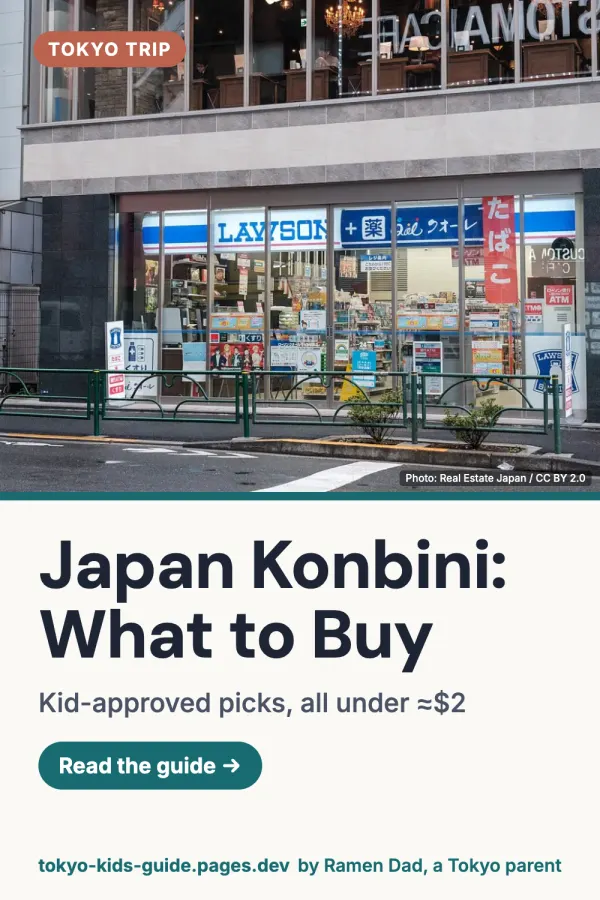
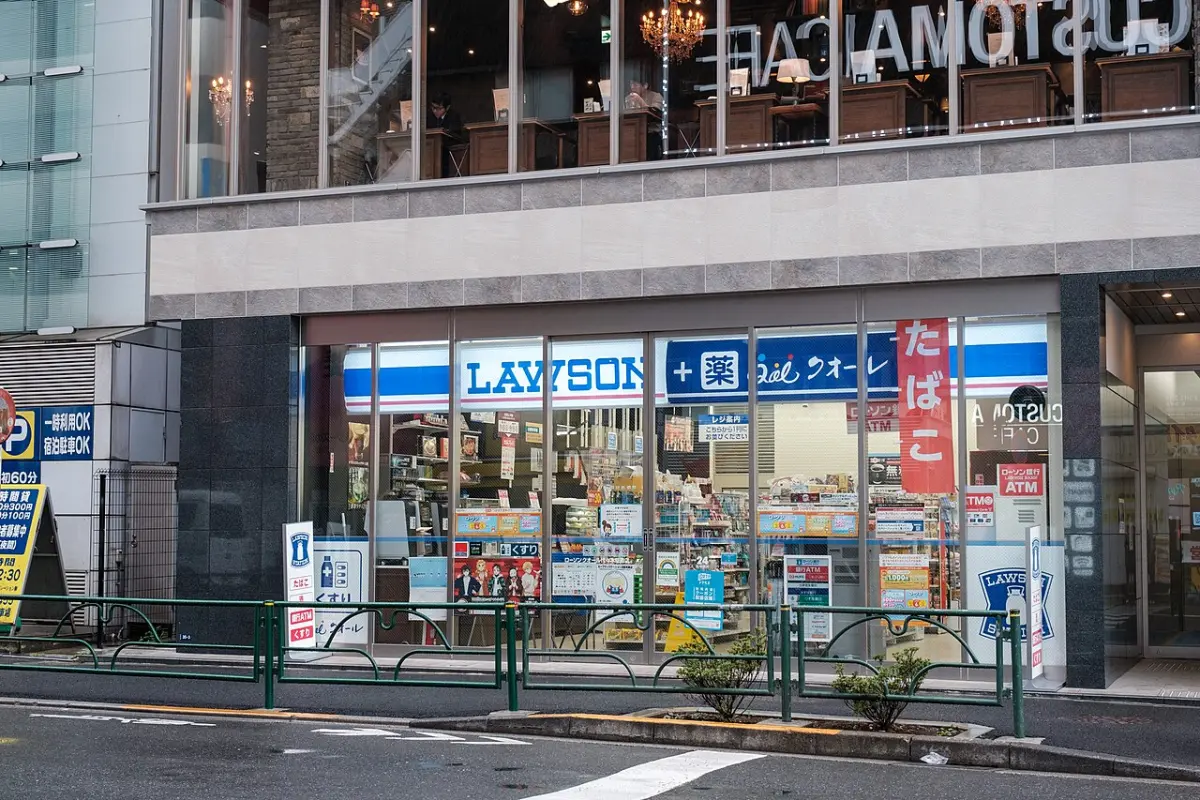
One of the first things families fall in love with in Japan is the konbini, the convenience store. In Tokyo it can feel like there's one on every corner: 7-Eleven alone had 21,956 stores in Japan at the end of September 2026, FamilyMart about 16,455 and Lawson 14,697. Rice balls, sandwiches, hot fried chicken, yogurt, fruit, drinks. For a family, it's a cheap breakfast, a backup lunch and a late-night meal after a long flight.I’m a Tokyo dad, and my second-grade daughter has strong opinions about konbini food. This guide covers konbini food for kids: what to buy, what it costs, how to read the allergen labels (they’re in Japanese), and the practical stuff: microwaves, eat-in tax, paying with Suica and baby items. Prices come from each chain’s official product pages.
Ramen Dad’s note: My daughter has a konbini item she always asks for. The lists below are a good place for your kids to find theirs.
Quick answer: konbini picks for kids
| Kid wants… | Try this | Price (official, takeaway) |
|---|---|---|
| Something like a sandwich | Egg sandwich (tamago sando) | 7-Eleven about ¥300 · Lawson ¥297 · FamilyMart ¥298 (≈$2) |
| Rice | Tuna-mayo rice ball (onigiri) | 7-Eleven about ¥197 · Lawson ¥171 · FamilyMart ¥198 (≈$1) |
| Fried chicken | Lawson Karaage-kun (5 pieces) · FamilyMart Famichiki | ¥288 · ¥248 (≈$2) |
| Something warm and soft | Steamed bun (nikuman meat bun / anman sweet bean bun) | 7-Eleven about ¥168 · Lawson ¥198 / ¥168 · FamilyMart ¥180 / ¥160 (≈$1) |
| Fruit | Banana | Lawson ¥127 (March 2026) · FamilyMart ¥140 (≈$1) |
| Something sweet | Pudding or a cream dessert | FamilyMart pudding ¥230 · Lawson Uchi Café desserts about ¥257–¥297 (≈$2) |
These are familiar starting points, not allergy-safe recommendations. Always check ingredients, and cut or skip textures that aren’t right for your child’s age.
Prices are what each chain lists online, tax included at the 8% takeaway rate. They vary by region and store, and every chain says so. Not every item is sold everywhere.
What to buy, chain by chain
7-Eleven
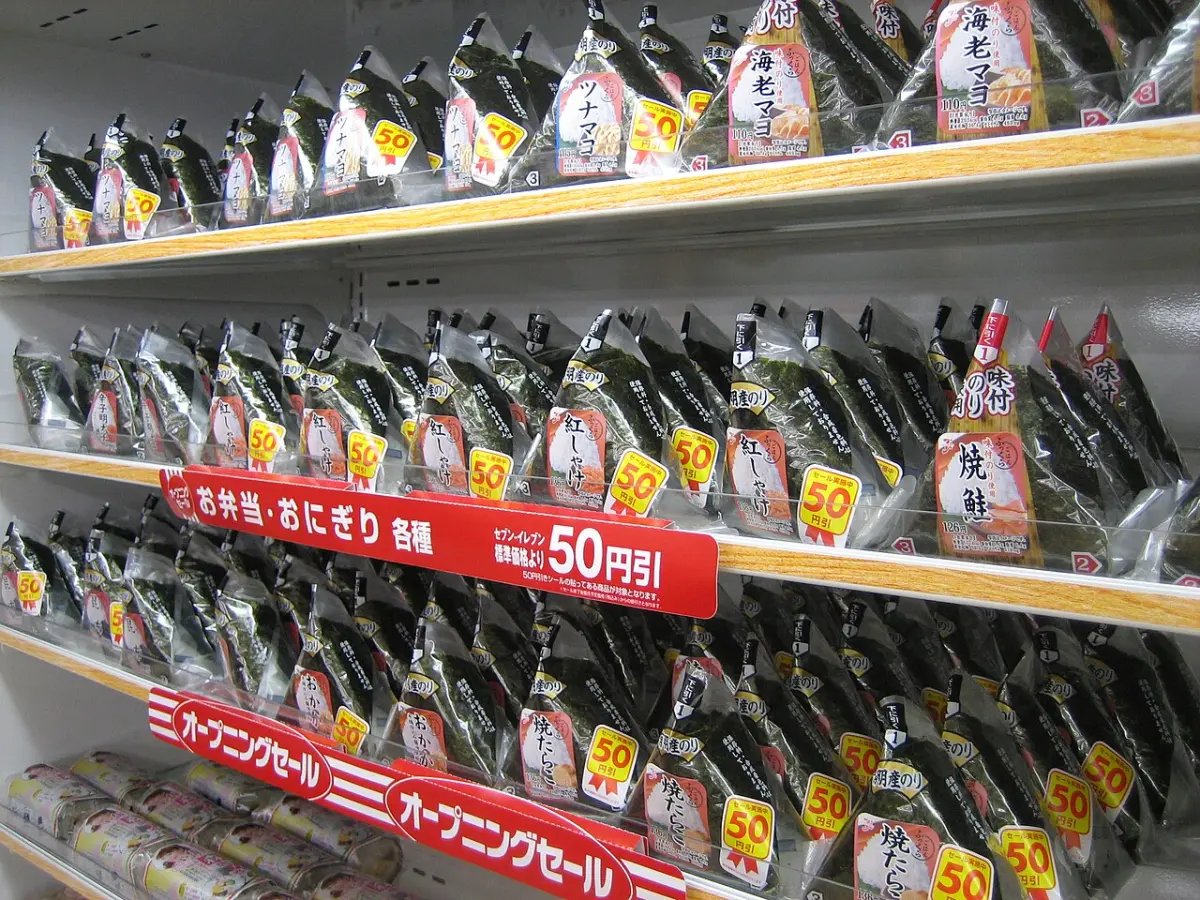
- Rice balls: tuna mayo (about ¥197 / ≈$1) and charcoal-grilled salmon (about ¥214 / ≈$1). 7-Eleven shows tax-included prices with decimals online (tuna mayo is ¥182 before tax, ¥196.56 with tax). At the register, tax is calculated on your total and rounded down to the yen.
- Egg sandwich: about ¥300 (≈$2).
- Hot items by the register: steamed meat bun (about ¥168), sweet sesame-bean bun (about ¥161), Nanachiki fried chicken (about ¥251), and oden in season (a soft-boiled egg about ¥150, daikon about ¥131).
Lawson
- Karaage-kun (¥288 / ≈$2): five bite-size pieces of boneless fried chicken in a little box, easy to share. Not sold at Natural Lawson.
- Rice balls: Sea-Chicken mayo (Sea-Chicken is a Japanese canned-tuna brand) ¥171 (≈$1), salmon ¥211 (≈$1).
- Egg sandwich ¥297 (≈$2), meat bun ¥198, sweet bean bun ¥168.
- Drinking yogurt (plain, 240 g) ¥168 (≈$1), and a wide selection of Uchi Café desserts.
FamilyMart
- Famichiki (¥248 / ≈$2): a large, boneless piece of crispy fried chicken. Easy to cut into smaller pieces for younger kids.
- Rice balls: tuna mayo ¥198, salmon ¥235.
- Egg sandwich ¥298, meat bun ¥180, sweet bean bun ¥160, pudding ¥230, banana ¥140.
Ramen Dad’s note: As a local parent, I think each chain has its strengths for kids. Prices and stock vary by store, so treat any list as a starting point.
A tip for picky eaters: start with flavors your child already knows, like tuna mayo, egg and fried chicken. For more on getting a picky eater through Japan, see my guide to eating out in Japan with a picky toddler.
Family of four: a konbini lunch
Assumptions: 2 adults and 2 kids, Lawson’s listed prices, taken away (8% tax).
| Item | Price |
|---|---|
| 2 × Sea-Chicken mayo rice balls | ¥342 |
| 1 × salmon rice ball | ¥211 |
| 1 × egg sandwich | ¥297 |
| 1 × Karaage-kun | ¥288 |
| 1 × drinking yogurt | ¥168 |
| Total | ¥1,306 (≈$8) |
This is a light, snack-style lunch for four, not four full-sized lunches. Older kids and hungry adults may want an extra rice ball or sandwich. Even after adding drinks and some fruit, it stays an affordable meal. Compare that with a sit-down meal near a big station (my Tokyo Station restaurant guide has an example), and you can see why families lean on konbini for breakfast and quick lunches.
Allergens: how to read a konbini label
This is the part that matters if your child has a food allergy.
What Japanese law requires
- Since April 1, 2026, packaged food in Japan must label 9 allergens: shrimp, cashew (newly added), crab, walnut, wheat, buckwheat (soba), egg, milk and peanut. Businesses have a transition period through March 31, 2028 for cashew, so some packages may still follow the older rules without cashew as a required item. (Consumer Affairs Agency)
- A further 20 items are “recommended”, not required: almond, abalone, squid, salmon roe, orange, kiwi, beef, sesame, salmon, mackerel, soy, chicken, banana, pistachio (added April 2026), pork, macadamia, peach, yam, apple and gelatin.
- Not covered: food sold loose without a package, and food served for eating on the premises (like a restaurant). Packaged food is covered wherever it’s sold.
- Hot-counter food is different: fried chicken, steamed buns and oden are prepared in the store and handed over across the counter, not sold in a labeled factory package, so the package-label rule doesn’t apply. For these, the chain’s website is your main allergen source.
What the chains’ websites show (October 2026)
All three chains still list allergens using the older 8 required + 20 recommended layout, with cashew in the recommended group. That’s allowed during the transition. Lawson notes it’s still adding pistachio.
- 7-Eleven: each product page lists allergens in text. Watch out on rice balls: the pages show only the 8 required items. The salmon rice ball says “none,” and salmon (a recommended item) isn’t mentioned. Steamed buns, oden and fried foods show all 28.
- FamilyMart: icons on each product page (wheat, egg, milk and so on), plus an allergen list by category.
- Lawson: a 28-item table on each product page, with the allergens shaded.
- English: I couldn’t find per-product allergen information in English at any of the three. Lawson’s English page only says to check allergens before buying.
- Shared equipment: all three note that items may be made or sold alongside products containing other allergens.
Japanese allergen words to recognize
| On the label | English |
|---|---|
| 卵 | egg |
| 乳 / 乳成分 | milk |
| 小麦 | wheat |
| そば | buckwheat |
| 落花生 | peanut |
| えび / かに | shrimp / crab |
| くるみ | walnut |
| カシューナッツ | cashew |
| 大豆 / ごま | soy / sesame |
On the package, look for the line アレルギー物質 (allergens) or a small table near the ingredients. Screenshot this table before your trip.
If your child has a severe food allergy, don’t rely on a translation, a website listing, or an allergen being missing from a product page. Check the actual package every time: recipes change, the chains say website information can differ from what’s in the store, and items may share equipment. When in doubt, choose something else.
If your child has a serious allergy, read my guide to a sick kid in Japan for emergency numbers before you go.
Ramen Dad’s note: I’ve read allergen labels at Japanese konbini. Check the actual package every time; recipes change.
Microwaves, hot water and eating in
- Heating: at 7-Eleven, staff will heat bento, side dishes and noodles that show a heating time for a 1,500 W microwave. They won’t heat most 7 Premium frozen or chilled items made for home microwaves (500–600 W), because a strong store microwave can burst them. Lawson says its bento can be heated too, and it has moved some stores to self-service microwaves. Just say “atatamete kudasai” (please heat it) or nod when the cashier asks.
- Hot water: I couldn’t find an official policy on hot water for instant noodles at any chain, so don’t count on it.
- Eat-in and tax: eating in the store’s eat-in area is taxed at 10%; taking it away is 8%. The rate depends on what you tell the cashier when you pay, not on the item itself; Japan’s tax agency says stores may simply post a sign asking eat-in customers to say so. Not every store has an eat-in area (FamilyMart says to check its store search).
- Toilets: Lawson says it was the first chain to open its toilets to the public, in 1997, and estimates about 1 million people use them every day. I couldn’t find a stated policy for the other two, and individual stores may close toilets for a while.
Paying: Suica works everywhere
All three chains accept Japan’s transit IC cards (Suica, PASMO, ICOCA and the other major ones). Lawson says this works at every store in Japan. 7-Eleven and FamilyMart let you top up your IC card at the register: 7-Eleven in ¥1,000 steps up to a ¥20,000 balance; FamilyMart in cash only. You can’t split one purchase across two IC cards.
Lawson’s English page adds that cards under ¥10,000 don’t need a signature or PIN, and its ATMs take foreign Visa, Mastercard, JCB and UnionPay cards around the clock. If your kids have their own IC cards, buying a konbini snack can be a fun way for them to make their first purchase in Japan.
Baby items at the konbini
Don’t rely on a konbini for baby supplies. What I could confirm on official pages:
- Diapers: 7-Eleven lists Merries Pants, size L, 4 pack for ¥448.80 (≈$3), taxed at 10%, listed for every region except Okinawa. 7-Eleven also says listed items may not be carried by every store, even within those regions, so don’t assume your nearest store has them. Small packs like this are for emergencies.
- Liquid formula: 7-Eleven has stocked it at a special baby-focused store (with about 200 baby items), but I couldn’t confirm it at regular stores. I found nothing current for Lawson or FamilyMart.
- Baby food: not in 7-Eleven’s product search.
Pack enough formula and diapers for the first day or two, and plan a drugstore or baby-store run after that.
Ramen Dad’s note: I’ve bought diapers and formula at drugstores in Tokyo. Pack enough for the first day or two, then plan a drugstore or baby-store run.
Konbini at the airport and at night
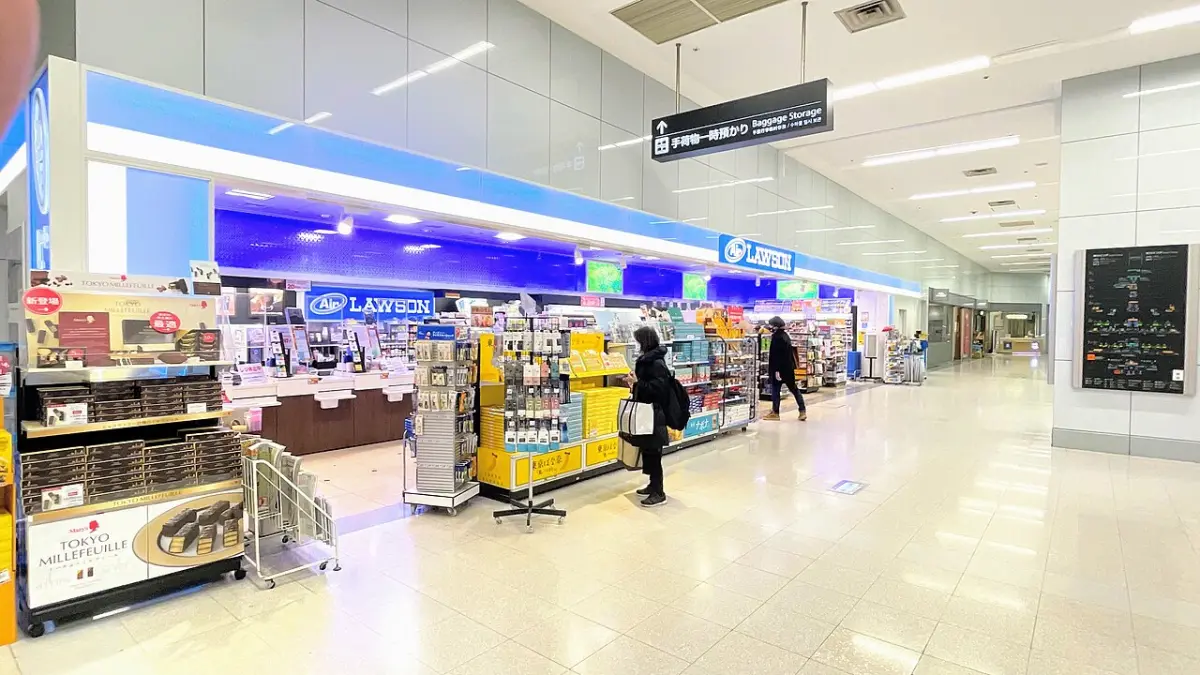
A 24-hour konbini is the backup plan for late arrivals. At Narita, according to the airport’s late-night page, Lawson (Terminal 1 and Terminal 3) and 7-Eleven (Terminal 2) are open all night. The airport notes hours can change, so check before you fly. See my guide to landing at Narita after 10 p.m. for the rest of the late-night picture.
FAQ from parents
“Is konbini food OK for toddlers?” Many families use it, but check salt, spice, allergens and textures (choking risks) yourself. Plain rice balls, egg sandwiches, bananas and yogurt are good places to start for kids who prefer familiar foods.
“Why does the cashier ask me something when I buy a bento?” Often whether you want it heated, or whether you’ll eat in (10% tax instead of 8%).
“Where do we get kids’ medicine?” That’s a different topic; see my sick kid in Japan guide.
“Are prices the same everywhere?” No. Each chain says prices and availability vary by region and store, and some items aren’t sold in some areas.
Ramen Dad’s note: My one-line advice: find the konbini nearest your hotel on day one. You’ll be back more often than you expect.
Before you go: konbini checklist
- Screenshot the allergen word table above if anyone in the family has an allergy.
- Load a Suica or other IC card so the kids can pay for their own snacks.
- Learn “atatamete kudasai” (please heat it).
- Decide eat-in or takeaway before you pay; eat-in is 10% tax.
- Pack baby supplies for the first days instead of relying on the konbini.
- Note the 24-hour konbini near your hotel for early breakfasts and late nights.
Prices, allergen rules and services checked on the official sites of 7-Eleven Japan, FamilyMart, Lawson, the Consumer Affairs Agency and the National Tax Agency on October 9, 2026. Prices vary by region and change often.