Disclosure: This article contains no affiliate links. All guidance below comes from the Japan Meteorological Agency (JMA), JNTO's Safety Tips for Travelers, and the Tokyo Metropolitan Government's disaster prevention website, including its guide for foreign visitors, checked on October 10, 2026. I'm a Tokyo parent passing on official guidance, not a safety expert. In a real emergency, **follow instructions from officials, hotel staff and facility staff.**
Japan has frequent earthquakes, and Tokyo is no exception. If you’re traveling with kids, it’s worth knowing in advance what Japan’s earthquake alert sounds like and what it means, what to do in the first few seconds, and what Tokyo asks visitors to do afterward.
The good news is that Japan publishes clear official guidance, some of it written specifically for foreign travelers. This guide puts the important parts in one place, in plain English, and covers the apps worth installing before your flight.
Ramen Dad’s note: Living in Tokyo, our family has decided how we’ll move in an earthquake. Make a simple plan with your kids before the trip.
Quick answer: earthquake basics for a Tokyo trip
| Moment | What the official guidance says | Source |
|---|---|---|
| Before you go | Install Safety tips (earthquake early warnings, tsunami warnings, weather warnings in 15 languages) | JNTO |
| Phone alarm goes off | Strong shaking may be seconds to tens of seconds away. Stay calm and protect yourself first, depending on where you are. | JMA |
| During shaking, indoors | Protect your head, get under a sturdy table or to a safe spot. Don’t rush outside. | JMA |
| In a crowded place | Follow staff instructions. Don’t run for the exits. | JMA |
| On a train or bus | Hold on tightly to a strap or handrail. | JMA |
| In an elevator | Stop at the nearest floor and get off. | JMA |
| Near the coast | Strong or long shaking: start evacuating to higher ground right away. Don’t wait for a warning or to assess the risk yourself. | JNTO, JMA |
| After shaking | Check official information. Stay in a safe place; don’t head to a station or back to your hotel. If where you are isn’t safe, move somewhere safer. | Tokyo Metropolitan Government |
| At your hotel | Ask staff whether it’s safe. If it is, stay and follow their instructions. | Tokyo Metropolitan Government |
Apps to install before your Tokyo trip
Safety tips (Japan Tourism Agency)
Safety tips is a free disaster-alert app for foreign visitors. JNTO’s page says it sends push alerts for earthquake early warnings, tsunami warnings and other weather warnings in 15 languages, including English. It also has:
- an evacuation flowchart that shows what to do depending on your situation,
- communication phrases to get information from people around you, and
- links to useful disaster information sites.
The developer says the app has been supervised by the Japan Tourism Agency since it launched in October 2014. JNTO: the Safety tips app
Set it up at home: allow notifications and location, and open the flowchart once so you know where it is.
Disaster Preparedness Tokyo (Tokyo Metropolitan Government)
The Tokyo government’s official disaster app works in Japanese, English, Chinese (Simplified and Traditional), Korean and easy Japanese. Its features include disaster information push notifications, disaster maps and a kids mode. After a major disaster it can switch on a stranded-persons mode that shows nearby temporary shelters and train status. That mode isn’t available in normal times. In the My Area setting you can pick the city or ward where you’re staying to see local information. Tokyo Disaster Prevention App (Japanese)
The kids mode was added in a 2024 update to help children learn about disasters through play, using furigana and easy Japanese. For real alerts, parents should use the regular screen in English. Tokyo Metropolitan Government press release, March 1, 2024 (Japanese)
Kitakon DX (LINE)
If you use LINE, Tokyo asks anyone who could get stranded in the city to add its “帰宅困難者対策支援” (support for stranded persons) account, ID @157tdhuh, in advance. After a major earthquake, it lets you search for open temporary accommodation facilities near you and register to enter from your phone. Tokyo Metropolitan Government: Kitakon DX (Japanese)
You don’t need LINE. Tokyo’s guide for foreign visitors also shows a web version (kitacon-access.metro.tokyo.lg.jp/nyukan) where you choose your language (English, Chinese or Korean), pick a facility, enter your details and save a reception number to show at the entrance. TOKYO Disaster Action Guide & Map
Phones need data and power. Make sure each adult has a reliable mobile data connection (see my Japan eSIM guide for families), and a charged power bank in the day bag helps.
Ramen Dad’s note: I keep disaster apps on my phone, and I know the earthquake alert sound. Install the apps in this guide before you fly.
When the earthquake alarm goes off
Japan’s Earthquake Early Warning (緊急地震速報, kinkyū jishin sokuhō) is issued by the Japan Meteorological Agency when strong shaking is expected. It comes through TV, radio and phones with a distinctive alarm sound. On TV and radio it’s a chime; on phones from Japan’s main carriers it’s a special buzzer.
The JMA is direct about timing: you may have only a few seconds to a few tens of seconds between the alert and the strong shaking. Its basic rule is to call out to the people around you and protect yourself first, calmly, depending on your situation. The same applies if you feel shaking before any alert. JMA: When you see or hear an Earthquake Early Warning (Japanese)
JNTO’s English page says the same: even if you don’t feel shaking yet, stay calm and make sure you’re safe first. JNTO Safety Tips for Travelers
With kids: explain the alarm sound before the trip, so a sudden loud phone alarm in a quiet hotel room doesn’t cause panic. Practice ducking under a sturdy table and protecting your heads together, like a game.
What to do during the shaking
These are JMA’s examples, by location:
In a hotel room, apartment or home
- Protect your head and get to a safe spot, such as under a sturdy table.
- Don’t rush outside.
- Don’t force yourself to put out a fire.
In a crowded place (department store, station, theme park, museum)
- Follow the instructions of the facility’s staff.
- Stay calm, and don’t run for the exits.
On a train or bus
- Hold on tightly to a strap or handrail.
In an elevator
- Stop it at the nearest floor and get off right away.
Outside on the street
- Watch out for collapsing block walls, and for falling signs and broken glass.
- If you’re next to a sturdy building, go inside it.
The Tokyo government’s guide for foreign visitors puts it in three words: protect yourself, hold on to something stable, move away from anything dangerous. When the shaking stops: move carefully to avoid injury, put out any fires, and keep the exits clear. TOKYO Disaster Action Guide & Map
If you’re driving a rental car, JMA’s advice is different: don’t brake suddenly, turn on your hazard lights, slow down gradually, and pull over to the left if you feel strong shaking.
Tsunami warnings: if you’re near the water
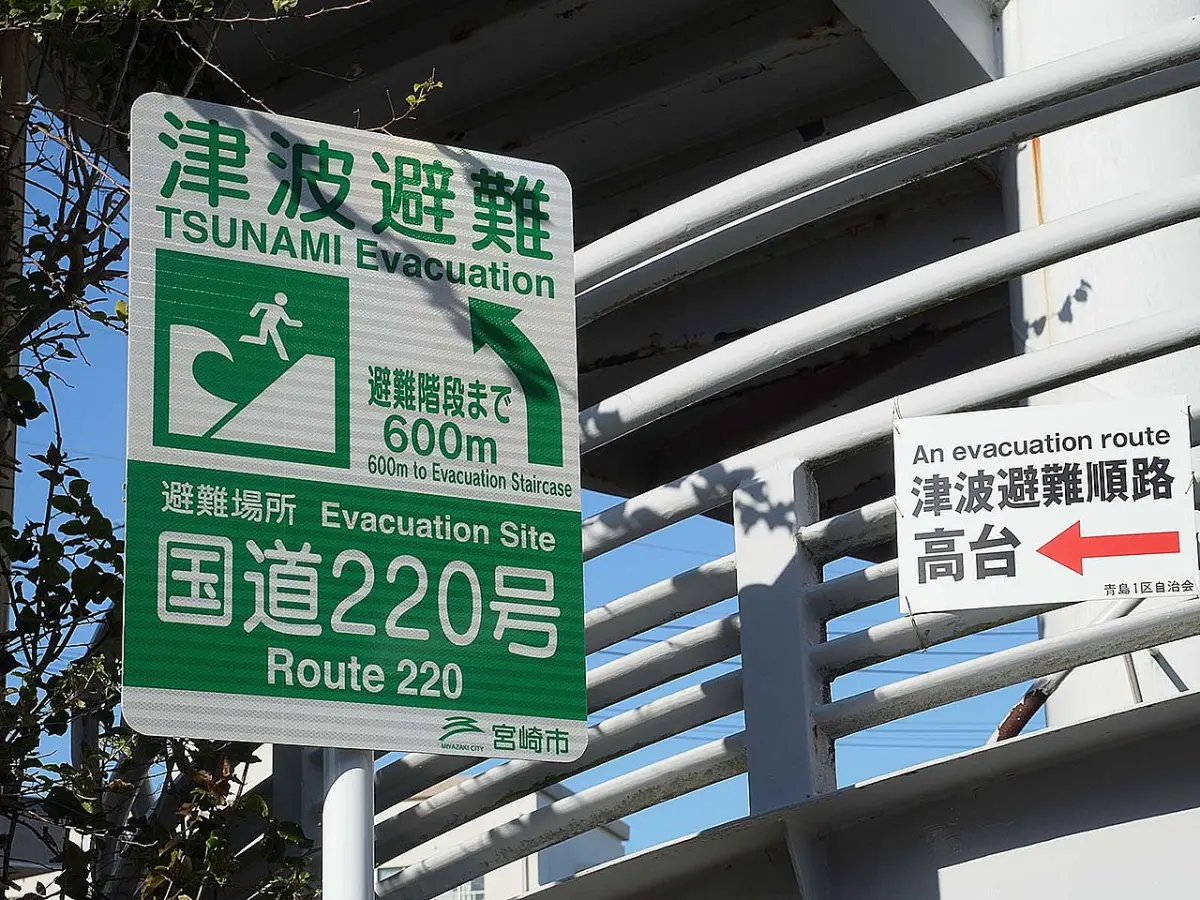
Some family areas around Tokyo are on the bay, including Odaiba and the Maihama area of Tokyo Disney Resort. The JMA aims to issue tsunami warnings and advisories within about three minutes of an earthquake (about two minutes for some). But a tsunami from an earthquake near the coast can arrive within minutes, so don’t wait for a warning. JMA: tsunami warnings (Japanese)
JNTO’s advice is:
- If you feel strong shaking, or weak shaking that lasts a long time, start evacuating.
- Don’t wait to assess the danger yourself; move to higher ground regardless.
- Stay in a safe place until the warning is lifted, because tsunami waves can come repeatedly over a long time.
In a theme park, hotel or station, follow staff directions. JNTO Safety Tips for Travelers
After the shaking: stay put, check official information
This is the part many visitors don’t know. After a big earthquake in Tokyo, trains may stop, roads and stations get crowded, and the Tokyo government asks people not to all head home at once. It even has an ordinance encouraging people to stay where they are.
Staying put means staying somewhere safe, not remaining in a damaged building. If there’s a fire, visible damage, a tsunami threat, or an evacuation instruction from officials or staff, follow it and move to a safer place. Tokyo’s guide also warns that in a big earthquake, buildings can be damaged, things can fall from above, elevators can stop, and trains and buses can make emergency stops.
Its guide for foreign visitors gives three steps:
- Make sure you’re safe when you feel shaking.
- Check official information once you’re safe: the Tokyo Metropolitan Government’s disaster website, its X account @tokyo_bousai, the Tokyo disaster app and the disaster map.
- Stay in a safe place when the shaking stops.
For step 3, the guide is specific:
- Don’t try to go to a train station or back to your accommodation, because you could be injured or get stuck.
- Stay away from crowded areas.
- Don’t move if you don’t know whether the route or destination is safe.
- At a hotel or other accommodation: ask staff whether it’s safe; if your location is safe, stay there and follow their instructions.
- Outside: look for a temporary accommodation facility.
A temporary accommodation facility is a place where people who can’t get home can rest or stay for a short time. Tokyo says support may include food, water, blankets, toilets, rest areas and information, depending on the facility. The guide’s maps show these facilities by tourist area. TOKYO Disaster Action Guide & Map
For families, this changes how you plan your day. Since Tokyo asks people to stay where they are rather than head back, I’d carry the everyday basics your kids need for a few hours away from the hotel: water, snacks they’ll eat, diapers if needed, any medicine, and a phone charger.
Ramen Dad’s note: As a Tokyo parent, being stuck away from home after a big quake is exactly the situation we prepare for. That’s why I keep a few hours of kid basics in the day bag.
Hotel tips for families
- Find your hotel’s evacuation route at check-in (ask the front desk if you can’t see it posted), and walk the route to the stairs once with your kids.
- Ask the front desk how they’d announce an emergency and whether they have information in English.
- Follow staff instructions during and after an earthquake; Tokyo’s guide says to stay if the hotel is safe.
My Tokyo family rooms guide covers booking the right room for your family.
Who to call
- Japan Visitor Hotline (JNTO): 050-3816-2787, 24 hours a day in English, Chinese and Korean. It helps visitors in emergencies, including disasters.
- 119 for fire or an ambulance, 110 for police. Call these directly in an emergency, not the hotline. Say you speak English and give your location as clearly as you can; in Tokyo, the fire department and police can bring an interpreter onto the call. See my guide to medical help in Japan and what to do if your child gets lost in Tokyo.
- Your embassy: JNTO’s Safety Tips page has a list of embassies in Japan.
FAQ from parents
“Should I cancel my Tokyo trip because of earthquakes?” That’s a personal decision, and I can’t predict earthquakes. What I can say: Japan has official alert systems and English-language guidance for visitors, and knowing it in advance helps.
“What does Japan’s earthquake alert sound like?” TV and radio use a chime; phones on Japan’s main networks use a special buzzer. JMA’s page links to the sounds so you can listen before your trip.
“Will my foreign phone get the alerts?” Not necessarily. The JMA says a phone gets these alerts only if the model supports them and the setting is on, and alerts can be missed during a call or where the signal is poor. Install the free Safety tips app as an extra source of English alerts, allow notifications and location, and keep your phone connected.
“Do we run outside when it shakes?” No. JMA says don’t rush outside; protect your head and get to a safe spot. In a crowded place, follow staff instructions.
“Should we go back to the hotel after a big earthquake?” Tokyo’s guide for foreign visitors says not to head to a station or your accommodation. Stay somewhere safe, check official information, and look for a temporary accommodation facility if you’re outside.
Before you go: earthquake checklist
- Install Safety tips and allow notifications.
- Install the Tokyo disaster app, and add Kitakon DX on LINE or note its web version.
- Save the Japan Visitor Hotline (050-3816-2787), 119 and 110.
- Download the TOKYO Disaster Action Guide & Map (PDF or EPUB) so you have it offline.
- Teach your kids the alarm sound and how to duck under a sturdy table and protect their heads.
- Check your hotel’s evacuation map at check-in.
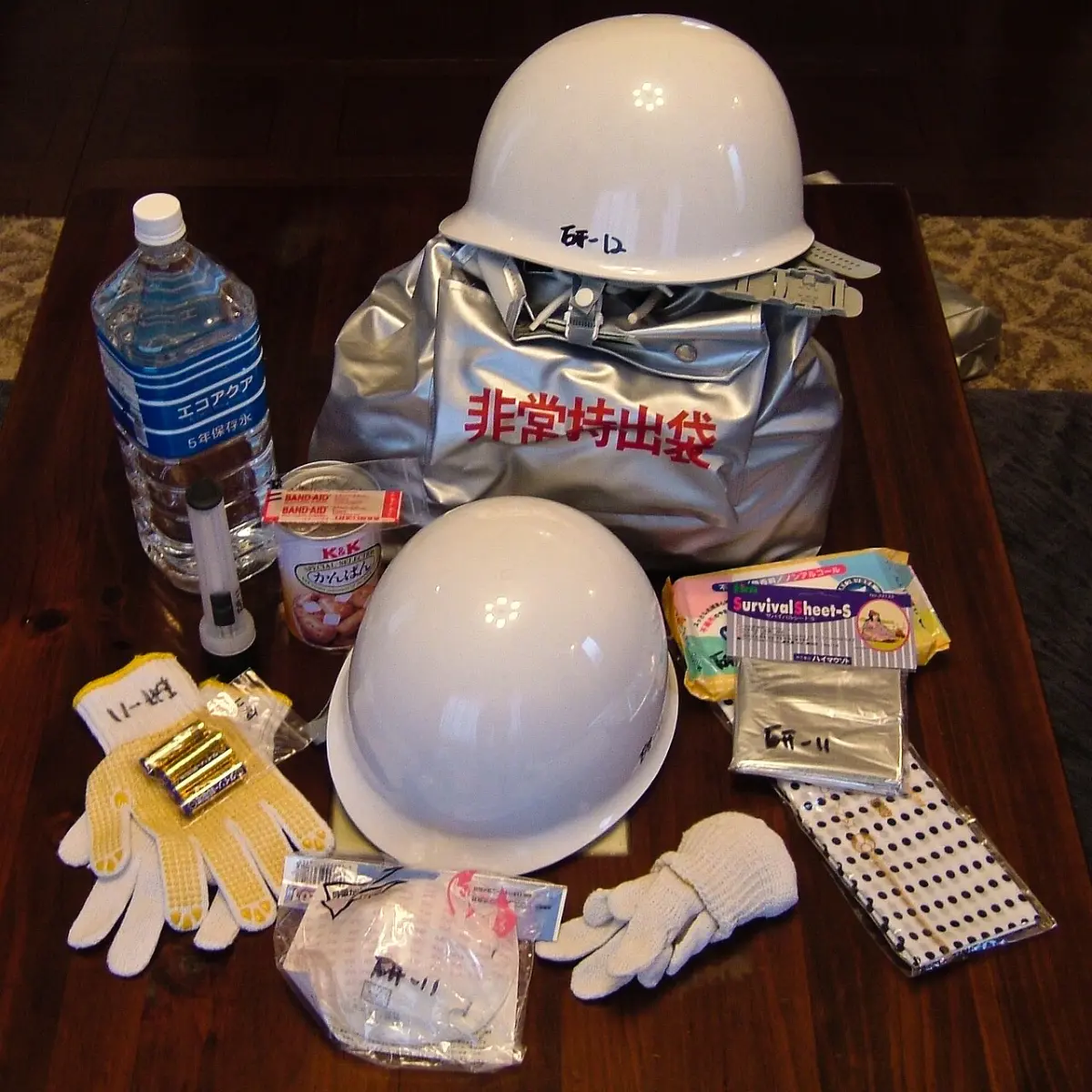
- Pack a day bag with the basics your kids need for a few hours: water, snacks, medicine and a charger.
- Make a family plan: save your hotel’s name and address in English and Japanese where you can see it offline, and agree with your kids on what to do if you get separated.
New to Tokyo? My first-time-in-Tokyo guide covers the other basics.
Ramen Dad’s note: If you remember one thing: check your hotel’s evacuation map at check-in, and pack a day bag. That’s most of the preparation.
Guidance checked against the Japan Meteorological Agency, JNTO Safety Tips for Travelers and Tokyo Metropolitan Government disaster prevention pages on October 10, 2026. In an emergency, follow instructions from officials and staff on site.