Almost every family packs a medicine bag: the fever reducer that works for your kid, an inhaler, allergy tablets, maybe an EpiPen or an ADHD prescription. Then someone on a forum mentions that Japan is strict about medicine, and you start wondering whether customs will take it all.
For most families, the answer is simple: you can bring typical travel quantities of most everyday medicines without any paperwork. The trouble is a short list of exceptions: larger quantities, a few controlled ingredients, and one group of drugs that Japan bans outright, even with a prescription. Some of those exceptions are common children’s ADHD medicines.
I’m Ramen Dad, a Tokyo parent. I’ve read the rules on the Ministry of Health, Labour and Welfare (MHLW) and Narcotics Control Department (NCD) sites in the original, checked on October 9, 2026, so you don’t have to rely on a forum thread. I’m not a doctor or a pharmacist. If you’re not sure which category your child’s medicine falls into, ask the doctor who prescribed it, and apply for the paperwork if in doubt.
Ramen Dad’s note: We pack a medicine bag whenever we travel abroad with my daughter. Keep it in original boxes, in your carry-on.
Quick answer
Before you check how much medicine you can bring, check what’s in it. Japan has separate rules for certain controlled ingredients, including some ADHD medicines and some cold medicines. A prescription from your home doctor doesn’t automatically make a medicine legal to bring into Japan.
| What you’re bringing | Typical paperwork requirement | Limit without paperwork |
|---|---|---|
| Over-the-counter medicine (fever reducer, allergy, cold medicine*) | No | Up to 2 months’ supply at the label dose |
| Topical OTC (creams, ointments) | No | Up to 24 items per product, standard size |
| Prescription medicine | No, unless a controlled ingredient (below) applies | Up to 1 month’s supply |
| More than the limits above | Yes: Yunyu Kakunin-sho (import certificate) | Apply online before you fly |
| Insulin or other self-injected medicine brought together with its syringes | No | Under 1 month’s supply |
| Syringes on their own | Yes, even one | |
| Psychotropics, e.g. methylphenidate (Ritalin, Concerta) | No, up to a set weight; extra rules over 1 month’s supply | e.g. methylphenidate 2.16 g total |
| Narcotics or “stimulants’ raw materials,” e.g. codeine, Vyvanse, pseudoephedrine | NCD permit for regulated products (some low-strength products are exempt) | Apply at least 14 days before travel |
| Amphetamine (Adderall, Dexedrine) | Banned | Cannot be brought in at all |
*Some cold and allergy medicines contain pseudoephedrine, which has its own rules. See below.
All of this assumes the medicine is for your own family’s personal use. You can’t bring medicine to give to or sell to someone else.
The basic rule: quantity limits for non-controlled medicines
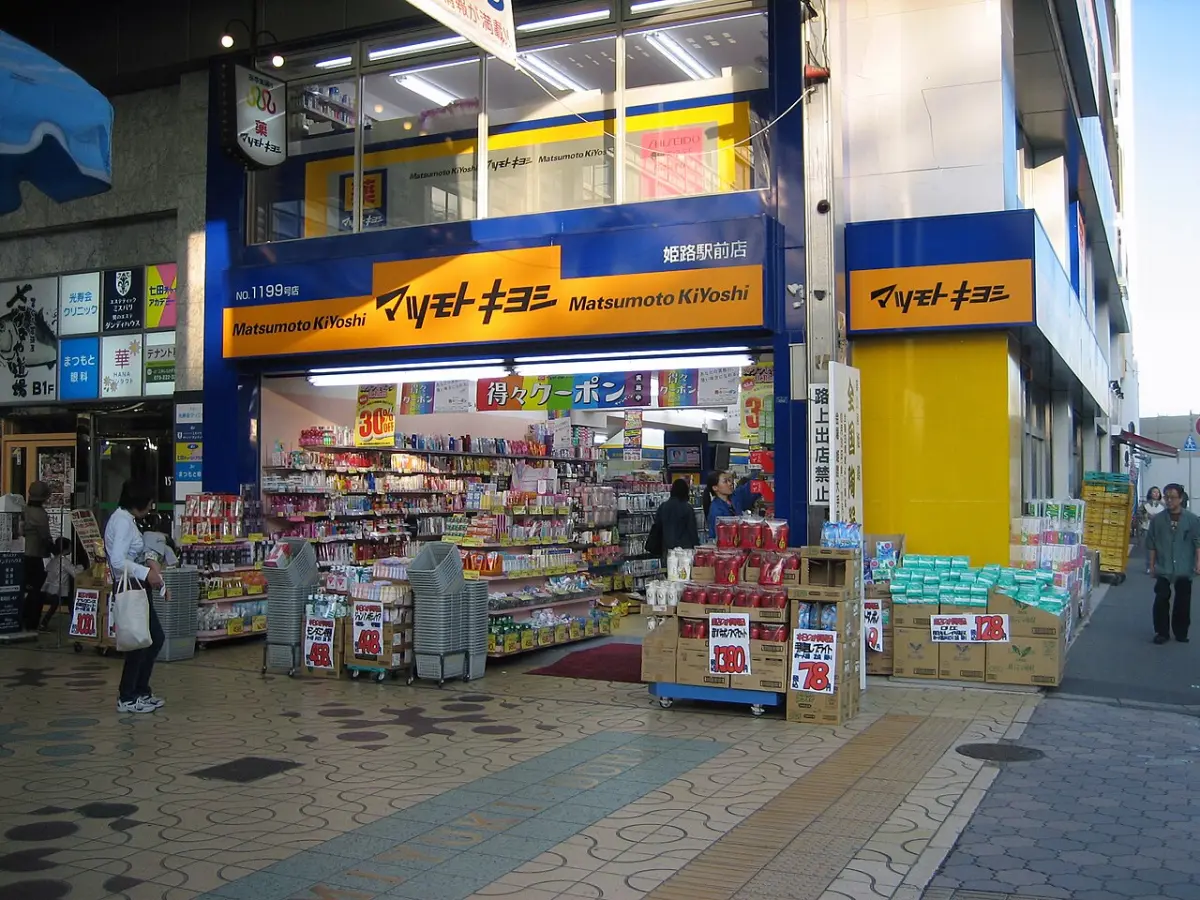
For medicine without controlled ingredients, there’s no special procedure. What matters is how much you bring. The MHLW sets these limits for personal use, with no procedure needed (MHLW):
- Prescription medicine (including powerful and poisonous drugs): up to 1 month’s supply, based on the dose.
- Other medicine, such as over-the-counter products: up to 2 months’ supply, based on the dose on the label.
- Topical medicine (not prescription): up to 24 items per product in a standard size.
- Medical devices: one set for home use; disposable devices up to 2 months’ supply.
What that means for a family
Picture a typical two-week trip: a children’s liquid fever reducer, an antihistamine, a tube of eczema cream, a prescription inhaler and a parent’s blood-pressure pills. These amounts will usually be within the standard limits. Still, check the active ingredients of each medicine before packing, especially cold medicines and prescription drugs.
Where families go over: a long stay (a month or more on prescription medicine), or bringing a big stock of something because you can’t get it in Japan. That’s when you need the import certificate.
Why bring your own kids’ fever reducer
You can buy medicine in Japanese drugstores, but the boxes are in Japanese and the age rules are strict. For example, the two children’s acetaminophen products from a common Japanese brand I checked are both labeled for ages 3 and up, with a clear “do not give under 3” warning. If your child is younger, packing the fever reducer you already use at home is the easier route. My guide to a kid getting sick in Japan covers clinics, phone lines and what to do at night.
Ramen Dad’s note: I’ve bought kids’ medicine at Japanese drugstores. The age rules on the boxes are strict, which is why bringing your own fever reducer makes sense.
The Yunyu Kakunin-sho (import certificate): when and how
If you’re bringing more than the limits above, you need a Yunyu Kakunin-sho (輸入確認証, import certificate) before you arrive. It’s the same document for prescription and non-prescription medicine.
How to apply (MHLW Q&A, PDF):
- Create an account on the online Application for Import Confirmation system. It has been online since February 2023 and takes applications at any hour.
- Fill in the form and upload two documents:
- a prescription or doctor’s note that shows the patient’s name, the medicine and the doctor’s name, for every medicine you’re applying for;
- a document from the airline showing the arrival date, arrival airport, flight number and passenger name (your itinerary or ticket copy works).
- Wait for review. The certificate is normally issued within a few business days, not counting weekends and Japanese holidays.
- Download the certificate (it’s also emailed) and carry it. Show it at customs if you’re asked. Don’t write on it or correct it: an altered certificate is invalid.
If you’re short on time or unsure whether you need one, the MHLW Q&A says to email the pharmaceutical inspector for your arrival airport (for Narita and Haneda, that’s the Kanto-Shin’etsu Regional Bureau of Health and Welfare) with the product name, active ingredient and strength, form (tablets, vials) and how much you’re bringing.
Medicine by mail: you can’t send psychotropics, narcotics or stimulants’ raw materials to Japan from overseas. Carry them.
Controlled medicines: ADHD meds, codeine, strong cold medicine
This is where the rules can catch families off guard, because some children’s medicines that are routine at home are controlled in Japan. The NCD sorts them into categories, and each one has a different procedure (NCD application guidance, updated April 2026).
Banned completely: amphetamine (Adderall)
From the NCD’s own FAQ: “Can I bring ADDERALL into Japan? No.” Amphetamine, the active ingredient, is controlled as a “stimulant” and can’t be imported even for treatment. The same ban covers dexamphetamine, levamfetamine and methamphetamine.
If your child takes an amphetamine-based medicine, talk to their doctor months before the trip about what to do while you’re away. There is no form that makes it legal to bring.
May require advance permission: Vyvanse, codeine, pseudoephedrine
Vyvanse requires advance permission. For medicines containing codeine, pseudoephedrine or ephedrine, it can depend on how much of the ingredient the product contains. Regulated “narcotics” and “stimulants’ raw materials” need permission before you enter Japan:
- Lisdexamfetamine (Vyvanse, Elvanse): the NCD FAQ answers “Yes,” you can bring it with an advance permit.
- Narcotics such as codeine, morphine, oxycodone and fentanyl. (Tramadol is not a narcotic in Japan.)
- Pseudoephedrine and ephedrine.
The NCD’s controlled-substances list excludes products containing 10% or less of ephedrine or pseudoephedrine, and 1% or less of codeine. Those percentages are about the product’s composition, which is hard to judge from a box. Don’t rely on your own calculations to decide a product is exempt; ask your doctor or pharmacist, or ask the NCD when you apply.
No permit up to a limit: methylphenidate (Ritalin, Concerta)
Methylphenidate is a psychotropic. You don’t need a permit or a doctor’s certificate if you bring 2.16 g or less in total (not in injection form). Over that amount, carry a certificate from the prescribing doctor that names the condition, why the medicine is needed, and the medicines and quantities. Other psychotropics have their own amounts in the NCD’s table (for example diazepam 1.2 g, clonazepam 180 mg, zolpidem 300 mg).
How to check: multiply the tablet strength by the number of tablets. 30 tablets of 36 mg is 1,080 mg (1.08 g), under the limit. Confirm with your pharmacist if the label is confusing.
Important for longer stays: the psychotropic weight limit is separate from the one-month rule. The MHLW says bringing more than 1 month’s supply of a psychotropic, or any in injection form, needs an import certificate in advance, and the NCD asks you to email the MHLW (yakkan@mhlw.go.jp) if you’re bringing more than 1 month’s supply. Check this even if the total is under 2.16 g (MHLW).
Ramen Dad’s note: As an ex-IT engineer, I always check the date on an official page and read the original wording. That’s how I checked every rule here.
How to apply for an NCD permit (narcotics and stimulants’ raw materials)
- Find out the category of your child’s medicine. The NCD list uses ingredient names, not brand names.
- Get a medical certificate from the prescribing doctor, issued within the last 3 months, with the patient’s name, current address, the specific reason for the medicine (“for personal use” or “for travel” isn’t accepted), each medicine with dose and strength, and the doctor’s signature.
- Fill in the import form, and the export form too if you’ll take leftovers home. For a child, write the child’s name (the person who takes the medicine). A parent who fills it in writes “[child]‘s parent/guardian wrote this on him/her behalf” in the margin and signs.
- Photograph your actual medicine packages from several angles, showing the full label. Send JPEG, PDF or Word files; HEIC photos can’t be opened.
- Email it to the NCD office for your arrival airport, at least 14 days before you travel. The NCD says the Tokyo office won’t accept last-minute applications for any reason. For Narita and Haneda, it also asks for a driver’s license or utility bill to confirm your address unless your doctor’s certificate shows it, and it doesn’t accept cloud-storage links.
- Send a follow-up email without attachments asking them to confirm receipt. Files over 10 MB should be split.
- Carry the medicine yourself and show the permit at customs. You can’t post it, and the NCD says you can’t hand it to someone else to carry.
Don’t forget the flight home. If you’ll leave Japan with leftover controlled medicine, the NCD asks you to submit the export form too, or to say in your email that you don’t need an export permit. Don’t assume the import permit covers your trip home.
Ramen Dad’s note: I’ve been asked about medicine at customs in Japan. Carry the medicine yourself, with prescriptions and any certificate printed.
Packing tips that make customs easy
- Keep medicine in its original packaging with the label, so the name and strength are readable.
- Bring a copy of the prescription or a doctor’s note, even when you don’t need a certificate.
- Pack it in your carry-on. If checked bags are delayed, you still have it.
- Liquid medicine? Keep it in its labeled container and check your airline’s and departure airport’s security rules for medically necessary liquids. Security screening is separate from Japan’s import rules.
- Count your supply against the trip length before you pack. If you’re over the limit, apply for the certificate.
- Bring enough of your child’s usual fever reducer for the trip, within the limits, since the Japanese children’s products I checked start at age 3.
For the rest of the packing list, see first time in Tokyo.
FAQ
“Do I need any paperwork for my kids’ Tylenol or Motrin?” Not if it’s within 2 months’ supply at the label dose and for your family’s use. No procedure is needed.
“Can I bring my child’s EpiPen?” The MHLW Q&A says self-injected medicine brought together with its syringes, under 1 month’s supply, doesn’t need a certificate. Syringes on their own do.
“My child takes Concerta. Do I need anything?” Methylphenidate is a psychotropic. Up to 2.16 g in total, no permit or certificate is needed. Above that, carry a doctor’s certificate. If you’re bringing more than 1 month’s supply, contact the MHLW first (see above).
“Can I carry my child’s controlled medicine for them?” A parent can fill in the NCD application on a child’s behalf, but the NCD also says controlled medicine must be carried by the person entering Japan and can’t be entrusted to others, including family. If your child is too young to carry their own medicine, email the NCD office for your arrival airport and confirm the procedure before you travel.
“What if I run out in Japan?” You’d need to see a doctor in Japan, and a Japanese prescription is only valid for 4 days. A note listing each medicine’s active ingredient and strength helps the doctor. See what to do if your kid gets sick in Japan.
“Can I mail our medicine to the hotel instead?” Not for psychotropics, narcotics or stimulants’ raw materials. For other medicine, the same quantity rules apply, and a parcel held at customs needs an application. Carrying it is simpler.
When to start preparing
If any medicine needs paperwork, start a few weeks before the trip. The NCD wants the application at least 14 days before you travel, with a doctor’s certificate issued within the last 3 months, so book the doctor’s appointment early. The import certificate is normally issued in a few business days once the application is complete, but leave room for a returned application.
Checklist: medicine before you fly to Japan
- List every medicine the family takes, with the active ingredient and strength.
- Check each one against the categories: ordinary, psychotropic, narcotic or stimulants’ raw material, or banned.
- Banned (amphetamine)? Talk to the doctor now about alternatives for the trip.
- Permit needed? Apply to the NCD at least 14 days before you fly, in the patient’s name.
- Over the quantity limits? Apply online for the Yunyu Kakunin-sho a few weeks ahead.
- Pack in original boxes, in your carry-on, with prescriptions and any certificate printed.
Ramen Dad’s note: If you remember one thing: check the active ingredients against the limits before you pack, not at the airport.
Rules checked against the MHLW, the Narcotics Control Department and the Import Confirmation system on October 9, 2026. This isn’t medical or legal advice. Rules can change, so check the official pages before you fly.